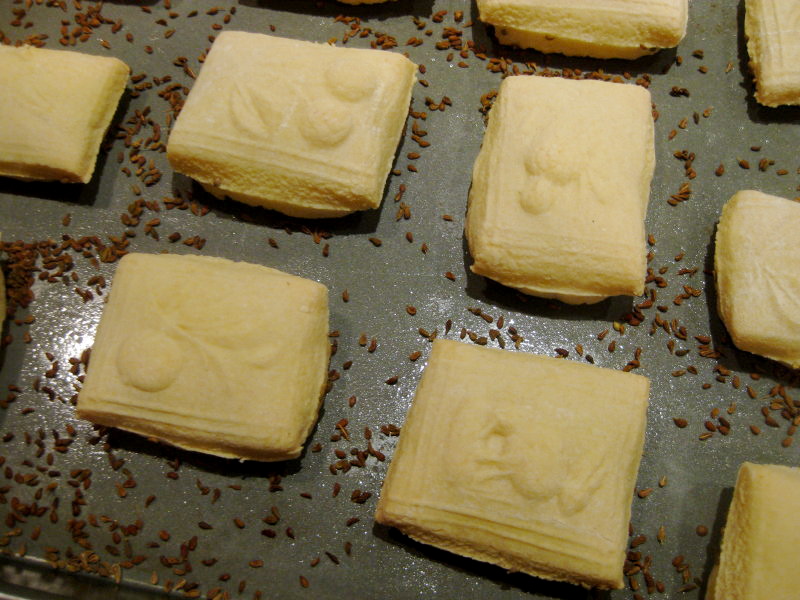
Springerle, just out of the oven
I am totally infatuated with my mother’s anise Springerle, a biscuit-like cookie that looks like it was created in an enchanted forest by incredibly talented kitchen elves. These cookies have embossed folk art designs on top, whole anise seeds embedded underneath, a crunchy layer on the outside, and a springy texture in the middle. How is this all possible for one little cookie? Even the name, Springerle, is an endearingly cute word that rolls off your tongue like a sweet piece of licorice.
Not surprisingly, Springerle cookies are full of history and culture. Springerle have been exchanged as gifts among families in the Bavarian parts of Europe for centuries. Today, people collect the intricately carved wood Springerle molds as antiques. Most Internet sources say that Springerle means “little knight” or “jumping horse.” To me, the cookies spring from a mold, hence, they are Springerle. It can’t be more complicated than that.
My mother has vivid childhood memories of making Springerle with her mother, Elizabeth Damm, who was born in Austria and came to this country after World War I. My grandmother must have made Spingerle in the old country, my mother says, because she recalls making them by hand with her mother every Christmas season.
When my mother and my grandmother made Springerle together, it was before the era of standing mixers, and they sat, facing each other on kitchen chairs, with a large bowl balanced on their knees between them, simultaneously beating by hand the eggs and sugar for up to 30 minutes, until they were the proper consistency.
A collection of Springerle molds – my mother calls them brett, or boards – are displayed in her modern kitchen, and she swears that a few of those boards belonged to her mother. Ruth bought her other boards at antique shows and a few during a trip to Bavaria.
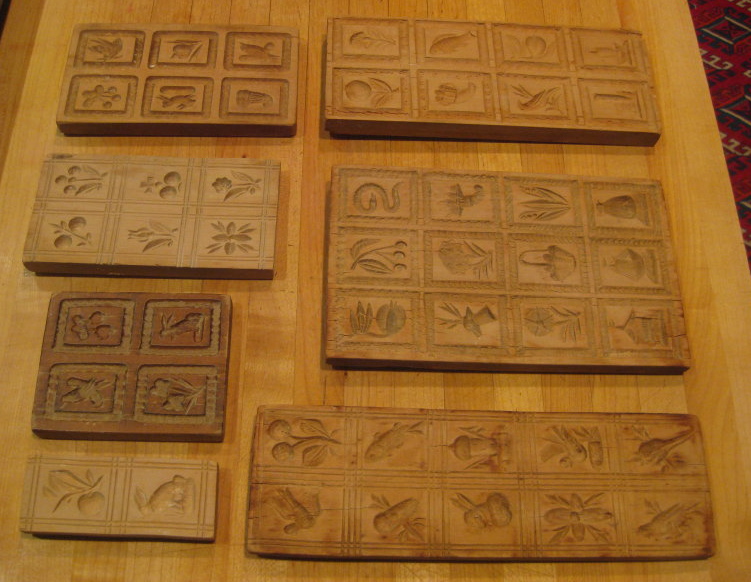
Ruth's wood carved Springerle Brett
The recipe my mother uses is from the 1956 8th edition of the first Gourmet cookbook, first published in 1950. It is not a complicated recipe, but the cookies, after being embossed, need to sit out at room temperature overnight before baking. This drying process will set the design, and give the cookies their trademark crunch.
Springerle are lovely edible heirlooms that are almost too good-looking to eat. Yet I look forward to devouring them year after year. Don’t worry if Springerle go slightly stale – they are delicious when dunked in cold milk or hot chocolate, and will keep the holiday spirit going, even after the calendar is turned to the New Year.
Springerle Recipe
Adapted from Gourmet Cookbook (1956)
Makes 45 to 50 cookies
Active time: about an hour to 90 minutes with bake time; dough needs to set overnight before baking
Ingredients:
4 eggs
2 cups fine granulated sugar
3 ½ cups sifted flour (plus more for rolling out dough)
1 teaspoon baking powder
¼ teaspoon salt
2 tablespoons butter, melted (plus more for buttering baking sheets)
4 to 5 tablespoons anise seeds for sprinkling on the buttered baking sheets
Preparation:
Sift together the flour, baking powder and salt, and set aside. Beat the eggs in an electric mixer until light and fluffy, about 10 minutes. Continue beating for about 6 or 7 minutes more, while gradually adding the sugar. Add the dry ingredients to the mixture alternatively with the melted butter. Add a little more flour if the dough is too sticky to roll out.
Gather the dough into a ball and place on a floured work surface. Using a floured rolling pin, roll out the dough lightly to ¼ to ½ inch thick. Use a Springerle board or Springerle-embossed rolling pin to press shapes onto the dough. Cut the cookies apart following the designs, trim the edges, and re-roll the excess scraps.
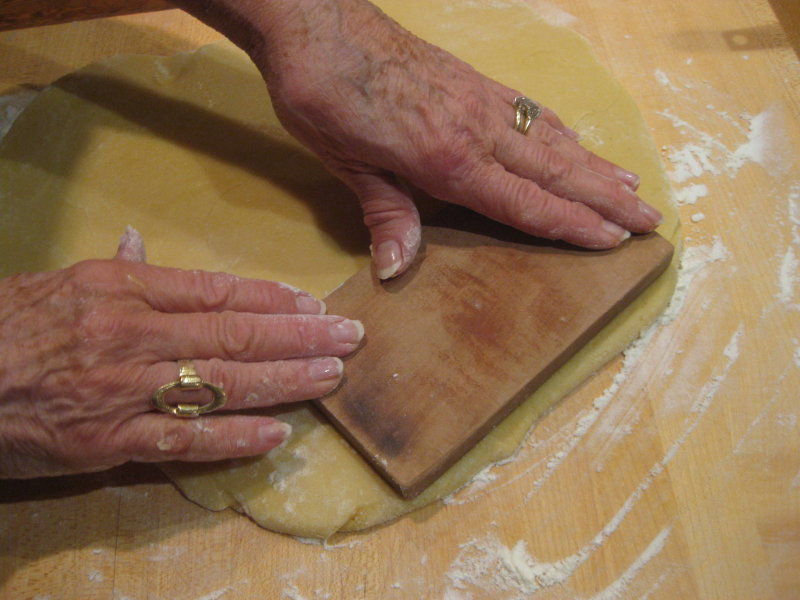
pressing the board onto the rolled dough to make the designs
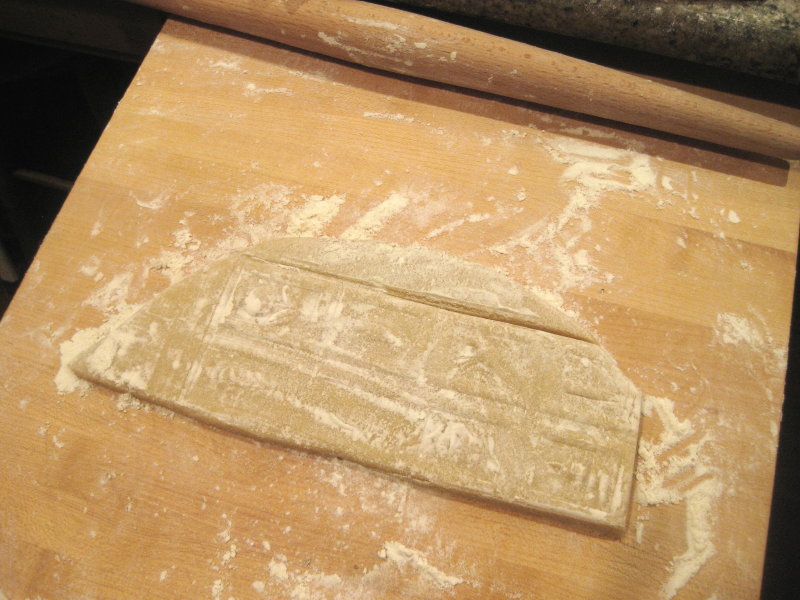
rolled out dough after getting embossed
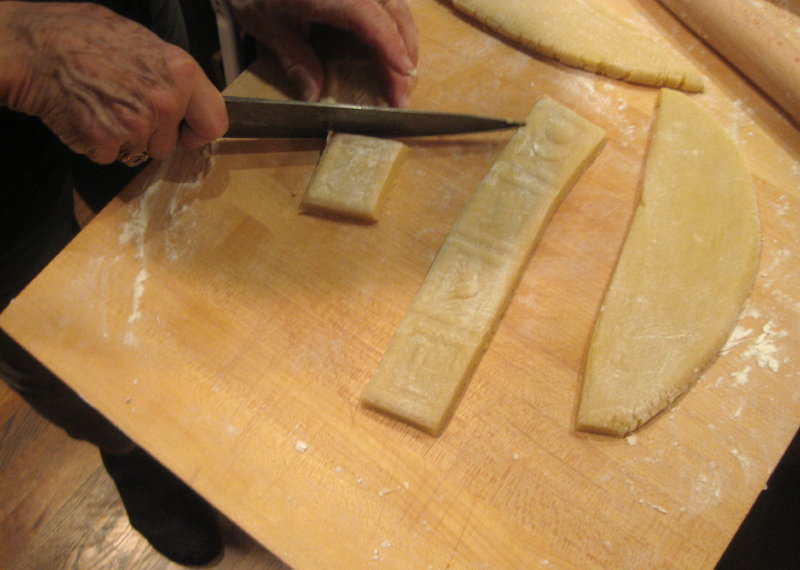
trim the cookies and re-roll the scraps
Sprinkle the buttered baking pans with the anise seeds. Place the cookies on the pans and let them sit out at room temperature overnight to set the designs.
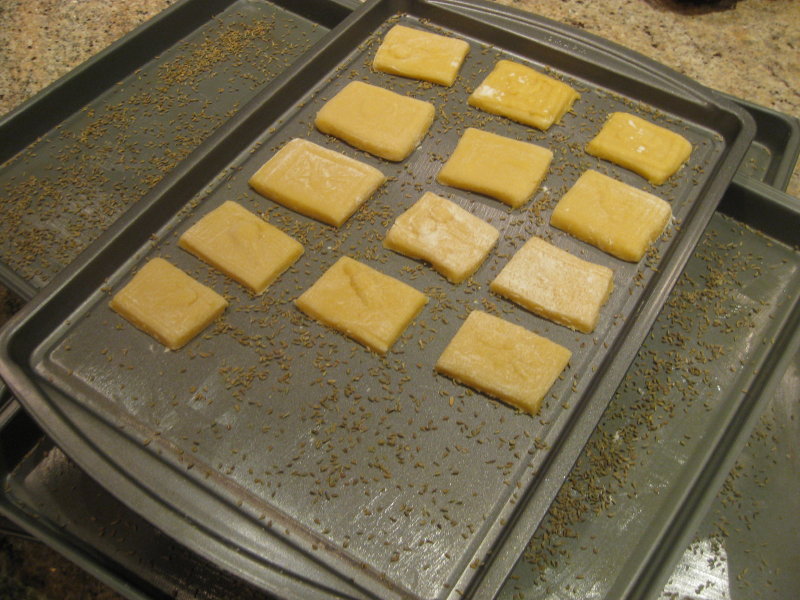
place the trimmed cookies on the buttered baking pans, sprinkled with anise seeds
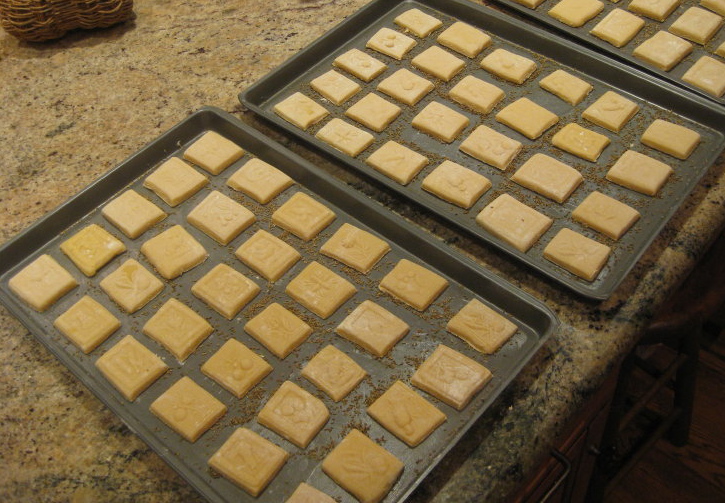
let the cookies sit out overnight before baking to allow the design to set
Preheat oven to 350 degrees. Place one sheet of cookies at a time in the middle to lower third of the oven. Bake at 350 degrees for 5 minutes, and then lower the temperature to 325 degrees and bake for about 10 minutes more. Do not allow the cookies to take on color, only the bottoms should turn a light golden color. Transfer the cookies to cooling racks; allow cookies to cool and dry completely before storing. Use airtight containers or tins, layering the cookies between wax paper. Add the leftover anise seeds to the tins for added flavor.
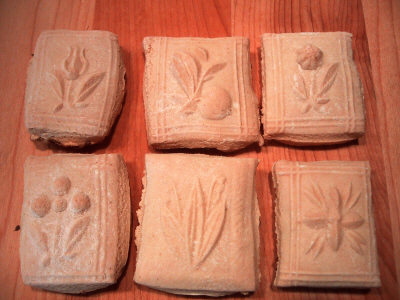
Springerle look almost too good to eat....


 Ruth's Christmas Cookies
Beautiful! What a lovely collection of molds you have.
We bake these every few years, and this time around we had particularly good luck.
http://howsrobb.blogspot.com/2011/12/springerle-success.html